Mistakes in Installing Surveillance Cameras
Surveillance cameras have become an essential component of business security, regardless of the industry. Whether it is a commercial space, office building, warehouse, or industrial facility, a properly designed video surveillance system can help protect assets, monitor daily activities, and deter unwanted incidents.
However, the effectiveness of a surveillance system does not depend solely on the quality of the equipment. In practice, many issues arise because of the way cameras are installed and configured. Even the most advanced equipment can become ineffective if it is installed incorrectly or integrated into an inadequate infrastructure.
Here are some of the most common mistakes made when installing surveillance cameras and how they can affect the security of a business.
Choosing Camera Locations Without Proper Assessment
One of the most common mistakes is installing cameras without carefully evaluating the area that needs to be monitored. Cameras are often placed where installation is easiest rather than where surveillance is most needed.
Without analyzing traffic flow, access points, and vulnerable areas, blind spots may remain unnoticed and become weak points in the security system. Proper planning should always begin with identifying risks and defining surveillance objectives.
Cameras Installed Too High or Too Low
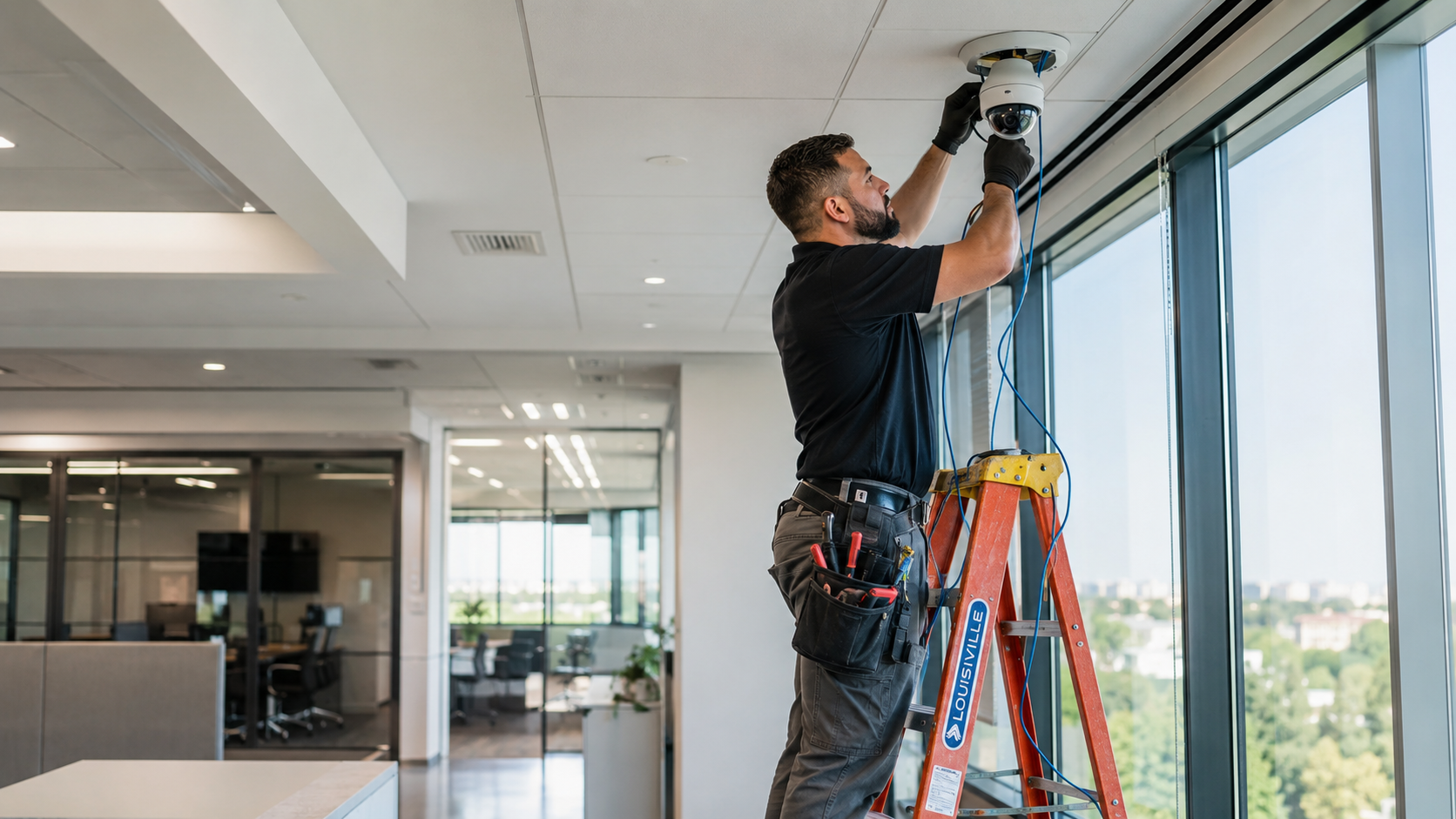
Incorrect positioning has a direct impact on image quality. A camera installed too high may provide a wide overview of the area but make it difficult to identify important details such as faces or license plate numbers.
On the other hand, a camera mounted too low may be vulnerable to damage or tampering and may provide a limited field of view.
Every project requires the right balance between equipment protection and image quality.
Blind Spots That Reduce System Effectiveness
A surveillance system may have enough cameras and still fail to provide adequate coverage. Blind spots occur when certain areas are overlooked during the design phase.
These uncovered areas may allow unauthorized access or make it difficult to reconstruct events after an incident. Before installation, it is recommended to simulate each camera’s field of view to ensure complete coverage of the monitored area.
Choosing the Wrong Resolution
Not every camera needs the same resolution. A common mistake is using cameras with insufficient specifications in areas where identifying people or objects is critical.
In other situations, extremely high-resolution cameras are installed in locations where such detail is unnecessary, resulting in higher storage and processing costs.
Camera resolution should always be selected according to the intended purpose and the distance between the camera and the monitored area.
Poor Lighting Conditions During the Night
Many surveillance systems perform well during daylight hours but deliver poor image quality at night. This usually happens when lighting conditions are not properly assessed or when inappropriate cameras are selected for the environment.
Modern surveillance technologies can provide excellent performance in low-light conditions, but the equipment must be chosen according to the specific characteristics of each location.
Insufficient Storage Capacity
Another frequently overlooked aspect is the storage space required for video recordings. In many cases, companies discover after an incident that important footage has already been overwritten.
The retention period for recordings should be determined according to business requirements and applicable regulations. Properly sizing the storage system is just as important as selecting the cameras themselves.
Neglecting the Network Infrastructure
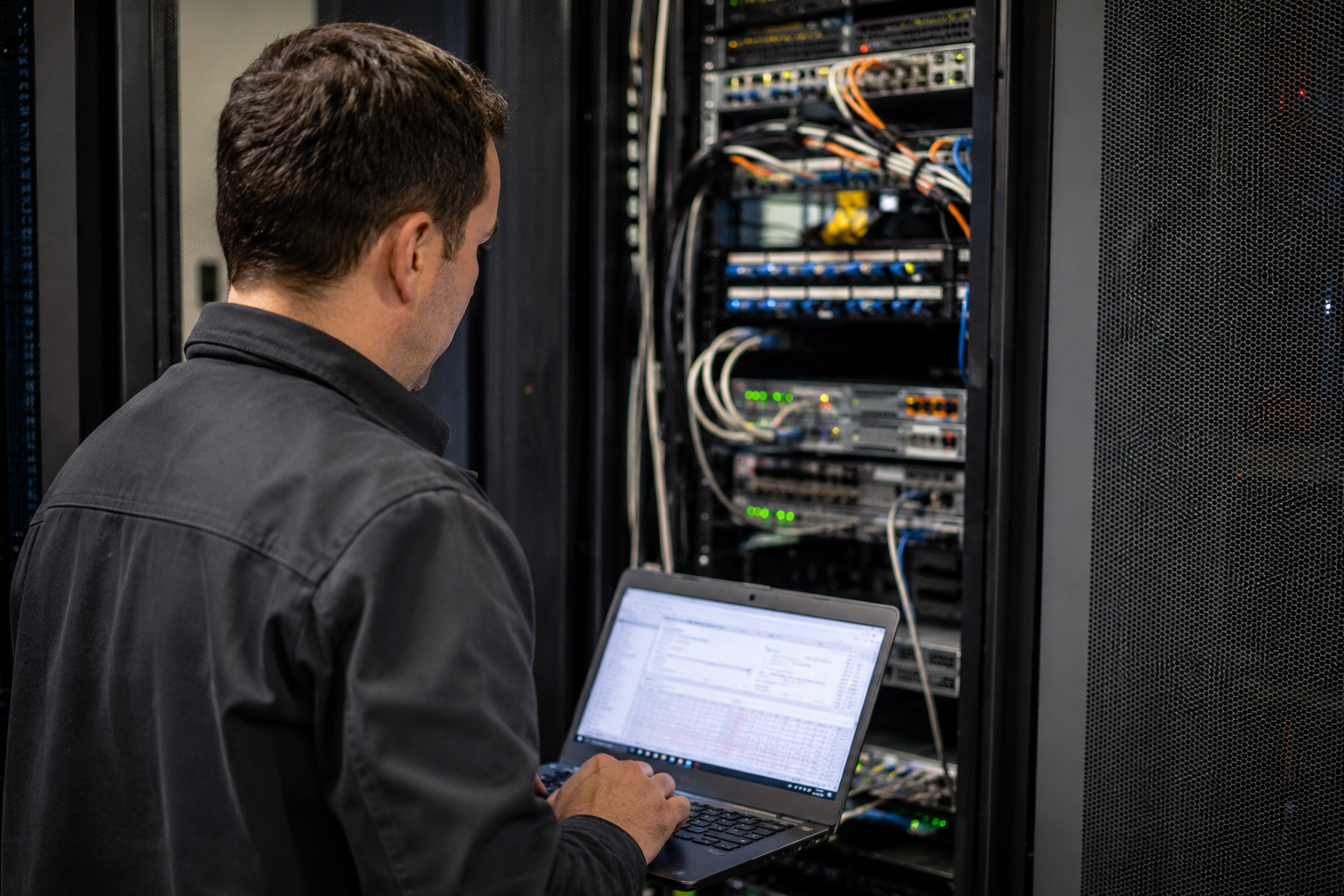
Modern surveillance systems rely heavily on a stable communication infrastructure. Poor cabling, outdated networking equipment, or the absence of a structured network can lead to interruptions, delays in video transmission, or complete loss of connection with certain cameras.
In professional projects, network infrastructure is considered an integral part of the security system. Structured cabling and fiber optic solutions provide the reliability required for long-term operation.
Lack of Regular Maintenance
After installation, many surveillance systems are left running for years without technical inspections. Over time, camera lenses become dirty, connections deteriorate, and certain components may require updates or replacement.
Regular maintenance helps preserve system performance and minimizes the risk of failures when the system is needed most.
Why System Design Matters More Than Equipment
In many situations, the difference between an effective surveillance system and one that fails to deliver results is not the camera model itself but how the entire solution is designed and implemented.
A well-designed project considers the building layout, existing infrastructure, storage requirements, lighting conditions, and future expansion possibilities. This ensures that the company receives a solution tailored to its actual needs rather than a collection of devices installed without a long-term strategy.
Proper Installation Provides Long-Term Security
Surveillance cameras are only one component of an effective security solution. To deliver real value, they must be integrated into a properly designed and configured infrastructure.
At Netcom Activ, every project is evaluated according to the specific characteristics of the location and the client’s requirements. From the initial assessment and system design to installation and maintenance, the goal is to implement solutions that provide performance, reliability, and long-term security.
A professional technical assessment performed before installation can eliminate most of the issues described above and transform a surveillance system into an effective tool for protecting your business.